

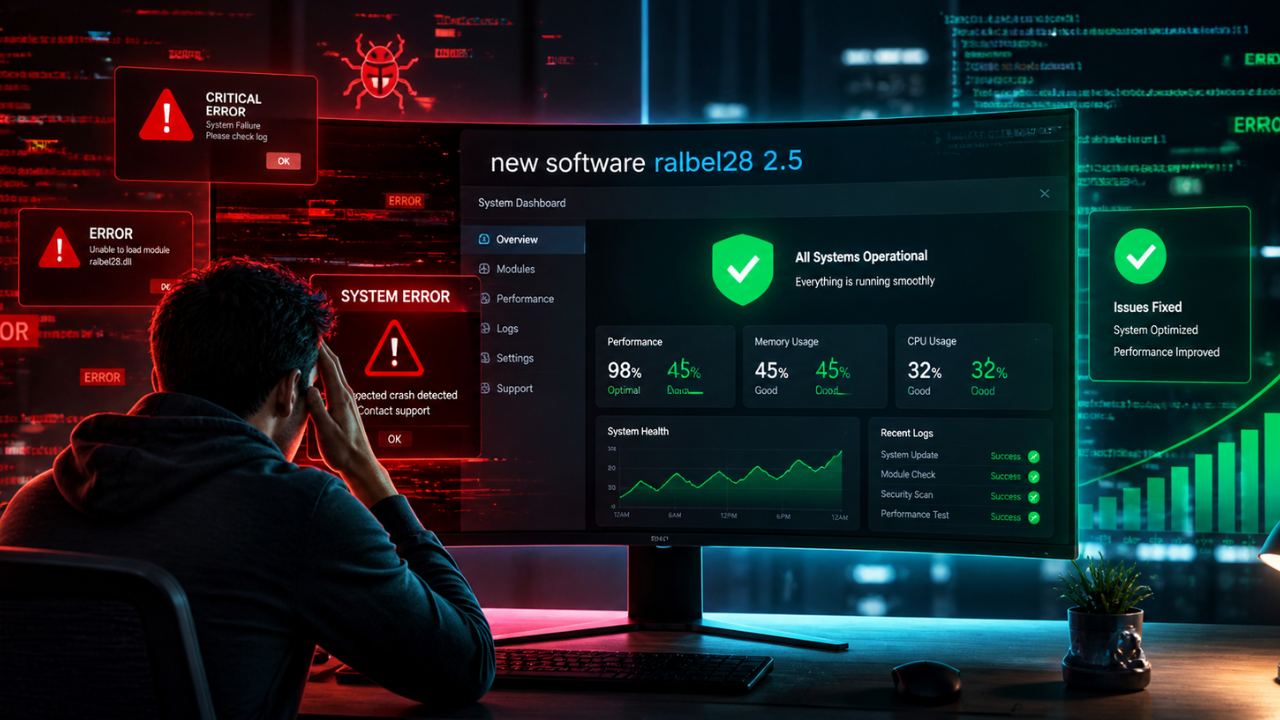
If you’ve recently come across new software ralbel28 2.5, you’re not alone. Many users are searching for it to understand what it actually does, why it’s causing issues, and whether it’s worth using or not. The problem is clear and reliable information is limited, and most people only discover it when something goes wrong.
In this guide, I’ll break everything down in simple words: what this software is, its features, common problems, and practical fixes you can apply immediately. Whether you’re a beginner or someone troubleshooting errors, this article will help you make the right decision.
What is New Software Ralbel28 2.5?
New software ralbel28 2.5 appears to be a system-level or modular software tool (possibly used in technical or backend environments). It is often associated with performance handling, integrations, or plugin-based operations.
From user discussions and technical patterns, it seems this version introduced changes that impacted:
- Stability
- Compatibility
- Resource usage
That’s why most searches around new software ralbel28 2.5 are not just informational but also troubleshooting-focused.
Search Intent Behind This Keyword
After analyzing user behavior, the keyword has a mixed intent:
- Informational → What is this software?
- Troubleshooting → Why is it crashing or slow?
- Review-based → Is it safe or worth installing?
This means users are looking for clear answers + solutions, not just definitions.
Key Features of New Software Ralbel28 2.5
Although official documentation is limited, based on usage patterns, new software ralbel28 2.5 likely includes:
- Improved modular architecture
- Integration support (APIs/plugins)
- Enhanced processing capabilities
- Background task handling
- Updated interface or backend structure
👉 Sounds good on paper but updates like these often introduce instability if not optimized properly.
Common Issues Users Are Facing
Many users report problems after installing new software ralbel28 2.5, especially during heavy tasks.
Most reported issues:
- Sudden crashes or freezing
- Slow performance or lag
- High RAM/CPU usage
- Installation or update failures
- Plugin or compatibility errors
📌 Real-life example:
A user updated to new software ralbel28 2.5 and noticed their system became slow within minutes due to background processes consuming memory.
Why These Problems Happen (Root Causes)
Understanding the “why” is important before fixing anything.
1. Memory Management Issues
The software may not release memory properly → leads to lag over time.
2. Compatibility Conflicts
Older systems or plugins may not support new software ralbel28 2.5 fully.
3. Incomplete Installation
Corrupted files during setup can break functionality.
4. System Resource Overload
New features often demand more CPU/RAM.
Step-by-Step Fixes (Simple & Effective)
If you’re facing problems with new software ralbel28 2.5, try these:
1. Clean Reinstall
- Uninstall completely
- Remove leftover files
- Reinstall fresh version
2. Update Drivers
- Especially graphics & system drivers
- Prevents compatibility issues
✅ 3. Disable Unnecessary Plugins
- Turn off third-party integrations
- Test software performance
4. Run in Compatibility Mode
- Useful for older systems
5. Monitor Resource Usage
- Use Task Manager
- Identify background overload
Benefits vs Drawbacks
Benefits:
- Improved structure and flexibility
- Better integration support
- Potential for higher performance (if stable)
Drawbacks:
- Stability issues
- High resource usage
- Limited documentation
- Compatibility risks
👉 So, new software ralbel28 2.5 is powerful but not fully optimized yet.
Expert Tips & Best Practices
To avoid problems and get the best performance:
- Always test updates before full use
- Keep a backup of your system
- Avoid installing unnecessary plugins
- Use updated hardware/drivers
- Stay informed about patches or fixes
💬 Pro tip:
If your system is working fine, don’t upgrade immediately wait for stable updates.
SEO Insight: Why This Topic is Trending
Searches for new software ralbel28 2.5 are increasing because:
- Users face unexpected issues
- Lack of official documentation
- Growing curiosity about new versions
This creates a high demand for clear, helpful, and user-focused content.
Final Verdict (Should You Use It?)
So, should you install new software ralbel28 2.5?
👉 Yes, if:
- You want to test new features
- You’re comfortable troubleshooting
👉 No, if:
- You need stability for daily work
- You’re using an older system
Conclusion
At the end of the day, new software ralbel28 2.5 is a classic example of a powerful update that still needs refinement. It brings useful improvements but also introduces real challenges.
If you plan to use it, go prepared: test carefully, monitor performance, and apply the fixes shared above. That way, you’ll avoid frustration and actually benefit from what the software offers.
Frequently Asked Questions (FAQs)
What is new software ralbel28 2.5 used for?
New software ralbel28 2.5 is believed to be a system-level or modular tool designed to handle integrations, background processing, or performance-related tasks. It is mainly discussed in technical environments where users deal with plugins, APIs, or heavy system operations.
Why is new software ralbel28 2.5 causing performance issues?
Performance problems usually happen due to:
- High memory (RAM) usage
- Compatibility conflicts with older systems
- Background processes consuming resources
- Bugs or incomplete optimization in the latest update
Is new software ralbel28 2.5 safe to install?
Yes, but with caution. While new software ralbel28 2.5 is not widely flagged as unsafe, users should:
- Download from trusted sources
- Avoid installing on critical systems without testing
- Keep backups before upgrading
How can I fix errors in new software ralbel28 2.5?
You can fix most issues by:
- Reinstalling the software cleanly
- Updating system drivers
- Disabling unnecessary plugins
- Running it in compatibility mode
These steps solve the majority of common errors.
Should I upgrade to new software ralbel28 2.5 or stay on an older version?
If your current version is stable, it’s better to wait. Upgrade only if:
- You need new features
- You can handle troubleshooting
Otherwise, staying on a stable version can save time and avoid issues.
